• DESIGN AND CONSTRUCTION OF INDUSTRIAL EQUIPMENT
  • DESIGN AND CONSTRUCTION OF INDUSTRIAL EQUIPMENT

EDS can be installed in any coastal area with a wave that generates a minimum output of 10 kWh per square meter of wave

Energy that is not used immediately (for example, at night) can be turned into hydropower.

The EDS system can be exploited for the production of drinking water

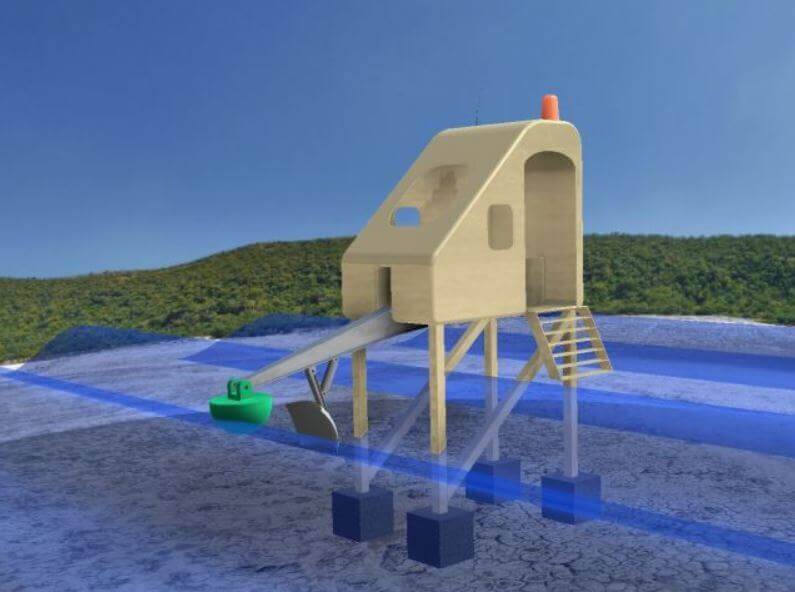
EDS can be placed under bridges, roads, parking lots, and is capable of integrating with complementary structures
EDS does not involve any risk and cannot in any way cause environmental disasters. Quite different is the situation by most energy production systems: gas and oil can catch fire or be dissipated into the sea or the environment, hydropower plants are subject to devastating breaks in dams, the damages caused by malfunctions of nuclear power plants are incalculable.

The construction and maintenance of EDS are completely safe and pose no risk either to workers, or to the surrounding environment.

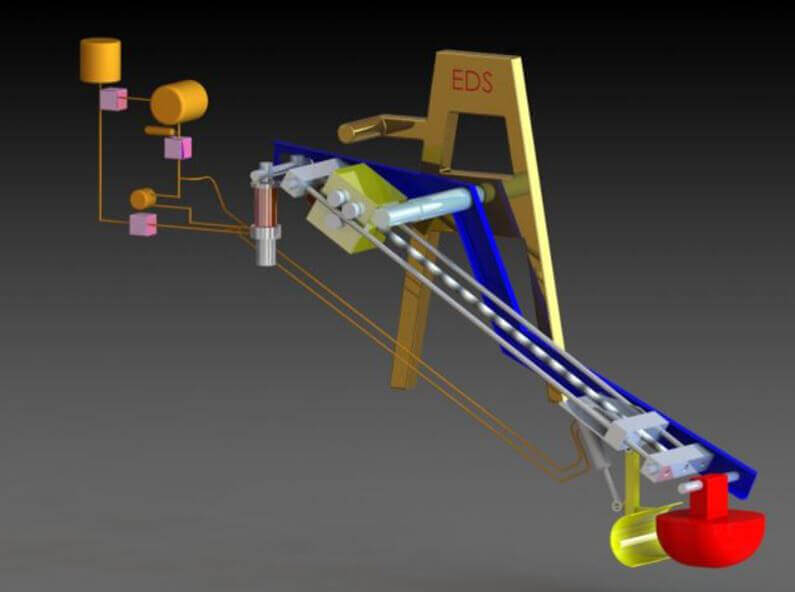
The EDS system uses throughout the full power of the wave, both vertical and horizontal. Thanks to the double movement of the arm, the energy yield is at least 40% of the power generated by the wave motion.

The costs for the installation of the plant are extremely low and the plant is located near the shore, needing no recourse to exceptional means.


Recent studies show that the cost curve for renewable energy is decreasing, while the costs of non-renewable energy are bound to rise in the future.

EDS uses a perpetual, inexhaustible, clean and totally free of charge source of energy.

Energy produced through EDS is 100% clean, so it cannot be subject to restrictions or inhibitions tending to safeguard the environment

EDS is a modular system that allows you to combine an unlimited number of individual machines, starting from a few units. This means that in all coastal areas you can get clean energy at zero kilometers.

The EDS system can be adapted to largely different wave motion, since moving components -those that create hydraulic energy - can be adapted to the specific wave length. The distance from the shore, and the size of the mechanical arms are able to exploit the most of any wave with a minimum average power of 10 Kw.

Productivity and economic performance of an EDS system, with a global installed power of 1050 kW, with 15 machines, each covering 4 meters wave surface.

Let's assume to place the EDS plant in a sea area with an average wave power of 20-25 kW per meter. Taking into account possible storms, during which the plant must be forcibly blocked for security reasons, we will then consider 7000, instead of 8760, hours of productivity per year .

Considering that the capacity of energy transformation of EDS cannot be below 40%, the productivity and the yield of the system can be calculated as follows:

9 kW/m x 4 m x 15 machines = 480 kWh

480 kW h x 7000 h = 3.360.000 kWh per year

This annual productivity is able to cover the average needs of 1,000 households of 4 persons

EDS generates energy sourced from a perpetual motion that creates a mechanical action, not depleting any natural resource.

EDS does not pollute because it generates no emissions. Contrary to fossil fuel, which releases in the atmosphere 750 g of CO² for every kW produced.

EDS does not alter the ecosystem and does not disturb marine life in any way.

EDS does not produce any kind of waste or slag.

EDS, also at the end of its productive life, can be disposed of in the most eco-friendly way, fully recycling its steel structures

EDS takes up a very small space (a machine stands on a base of about 16 square meters and rises to a height equivalent to that of an electricity pole). The environmental damage is therefore minimized.

EDS can be easily integrated into architectural structures such as bridges and parking lots, yielding an unsurpassed advantage of aesthetics and functionality mixed together.

EDS meets the requirements to access funding and government subsidies for renewable energy.

The estimated cost per KWH is less than 10 cents considering a low wave power. This cost promises excellent stability, not being affected either by the exhaustion of any natural resource or by actions of commercial monopoly.

Due to the low cost of installation and maintenance, the property of the energy sourced through EDS remains with the inhabitants of the coastal area - will not be swallowed up by government authorities or multinational companies.

The maintenance cost is about € 2,000 per year per machine; the decommissioning cost at the end of life is very low - consisting primarily in the disposal of steel used in the construction of the plant.